Wednesday, December 4, 2019

FCE's "X" Factor Part 1: Barn Life

Generally speaking, my horsey plans and goals are often formulated based on how I feel about my riding. Meanwhile the general "barn life" experience is mostly kinda an afterthought.

Being realistic, tho, most of my time at the farm is not spent in the saddle. And actually, my relationship with the barn itself can majorly influence my overall experience, even subconsciously. Which, naturally, impacts whether I ever meet those overarching goals or not.

Recently, Stacie referenced an interesting Chronicle of the Horse article about "not being an annoying boarder." I say "interesting" bc its examples of annoying boarder behaviors weren’t at all relevant to my own barn experience. At all. That author's barn is set up completely differently from mine, rendering her suggestions almost entirely moot.

But it got me thinking. Bc don't we all want to be pleasant upstanding members of our barn communities? And what does that even mean? Esp in more broadly applicable terms? So I want to take a closer look at key factors to the healthy barn relationship.

With this as an introduction, the 'Fraidy Cat Eventer is pleased to present the "X" Factor, a mini series exploring what it means to optimize our horsey experience and expectations, and be our best selves within that structure. Starting with: Barn life. 
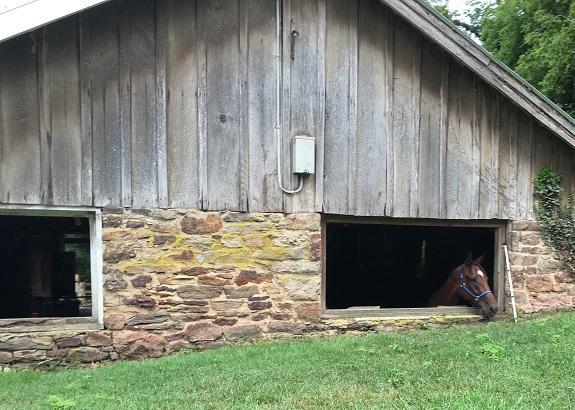

Part I: 5 Factors for Healthy & Happy Barn Life

The following comprise what it means to me to be set up for success at my barn. This should theoretically include everything I expect from my barn, while also clearly delineating my own responsibility as a boarder.

Obviously I'm drawing heavily from my own experiences to build this list, but am curious to know whether you agree or disagree. Would these same factors be on your list too? Or would your list look entirely different? Or maybe some of these lines blur together for you?

1. Services Agreement 

In my experience as both barn staff and boarder, the healthy barn relationship begins with a signed mutual agreement outlining the services provided and the costs thereof. This is the document stating, explicitly in words, what is covered by the cost of board.

At a minimum, the agreement should assign responsibility for a horse's fundamental needs: feeding, watering, turn out, clean up, and emergent care. For my lifestyle and purposes, I choose to board at what's considered a "full care" barn, meaning that these basics are all handled by barn staff. 

Other services may be considered in the agreement too, either included in the cost of board or as a la carte add-on fees: grooming, blanketing, exercise/training, scheduling and/or holding for farrier and/or vet services, trailer parking, laundry, booting for turn out, or other ad hoc necessities like stall rest or wrapping / medication surcharges. 

Regardless, a critical factor in being a happy boarder and/or barn mgr is knowing what's covered, and what isn't. Being completely realistic, if you begin a relationship with a barn without seeing eye to eye on the care or price.... You're setting up friction down the road. 


2. Delivery of Care

Factor #2 is the execution of the above services agreement. The expectation is that the barn delivers on what is agreed, and the owner pays. Both should operate within the parameters of that agreement, without demanding more or being negligent.

My expectations for barn management:

Essentially, it's the barn manager's responsibility to literally do the things laid out in the boarder agreement. But like. Really. Do them. And be accountable for them. Specifically,

- Deliver on the services stipulated in the board agreement.
- Maintain an environment that promotes the horse's safety, welfare and quality of life.
- Supply food and clean water sufficiently and on time, per the agreement.
- Routinely observe the horse for any signs of injury or illness.
- Contact the owner immediately with any questions or concerns.
- If barn staff is responsible for cleaning the barn... The barn should be cleaned.

As a barn worker, I always asked myself questions like, "What would a prospective new boarder think if they toured the barn while I'm working? Would they be satisfied with putting their horse in the stall I just mucked?"

- Manage turn in / out in a manner safe for both the staff and the horses.
- If the staff is large, ensure info is shared effectively from one shift to the next (rather than relying on the boarder to communicate individually with every worker).
- Do these things.
- Really. Do them. Completely, thoroughly, and without needing prodding or micromanagement.
- Also, let me know if I'm doing something wrong. Please.
- Put the horses first, always.


And in turn, the expectations for me as the boarder are to:

- Pay my bills.
- Make caring for my horse as easy as possible within reason.
- Provide clear instruction where applicable, like feed amounts, or a blanketing rubric by weather conditions if blanketing is an included service.
- Replace broken or missing equipment (like halters or water buckets) quickly.
- Follow barn protocols on storage of equipment, food, supplies, etc.

For example, staff at Isabel's barn were fine with measuring supplements out for each meal. At Charlie's barn, they require any supplements to be in pre-measured single servings.

- Communicate any changes or special needs cases via the "normal" channels in a timely manner.

We have various boards for sharing notes and updates. If it's not on the board? It might as well not exist.


- Label all the things.
- Pitch in or lend a hand when possible.
- At the very least, do *not* create additional unnecessary work for staff.
- If I don't know how something is supposed to be done, ask.
- And, ya know. Be flexible when unexpected disruptions occur.

Examples of pitching in will vary by barn. For example, I can fill Charlie's hay nets when I'm around, pick his stall when he's on stall rest, turn him in or out myself when I'm there (and maybe grab a second horse while I'm at it), or whatever.

These small tasks are inconsequential to me but make a worker's day that much easier. On the flip side, I promise you, barn staff will always notice if you make more work for them. Always. If you habitually leave messes behind, constantly block the aisles during turn in, or put your horse out 10 min before staff needs to bring him back in... They will notice.

Ultimately, tho, my most critical boarder responsibility is to advocate for my horse. So I want to make sure that when I *DO* speak up about my horse's care, I'm heard.

The best way to make this happen is to only say it when I mean it. To not be noisy about shit that doesn't matter. I don't mind being a giant pain in the ass when it comes to getting the basics of my horse's care covered. For the rest? I'm trying to learn to pick my battles.


3. Facilities

Presumably you've selected your barn because it has what you want. Likely some complicated calculus of riding space, turn out, stall configuration, etc. This is all relative, right? One rider might value trail access when another prioritizes indoor space.

Personally, riding facilities are key to my happy barn life. I ride year round in all weather - even dark winter nights, so options like an indoor or lighted arenas are important. Likewise, as an eventer, I chose a barn with a dressage ring, jump ring, and full cross country course. Access to these facilities is outlined in my boarder agreement and covered by my monthly payment.

Basically my expectations from the barn regarding these facilities are:

- Resources and equipment are maintained to be safe and usable.
- Footing in the riding arenas is consistent, and the xc course isn't riddled with holes etc.
- Equipment shouldn't be dangerously in disrepair.
- Any issues impeding the resource (like burnt out lights or a tree fallen into the ring or whatever) should get addressed in a timely manner. 


On my end, it's my responsibility to:

- Obey rules, follow acceptable guidelines, make safe choices, and share space.

Sometimes riding spaces get crowded, especially on dark winter nights when options are limited. As a member of the 'boarder tribe,' I must be safe and easy to ride around, and respectful of others. Even just reliably calling out "inside!" or "outside!" is key haha.

I also need to be respectful of the equipment and overall space:

- If stuff is supposed to get put away after I use it, put it away.
- If the xc course shouldn't be used in wet conditions, don't go tearing up the ground.
- If the lights are supposed to get turned off, make it happen.
- And for cryin out loud, do *not* leave manure where no manure should be.

The funny thing about sharing space is.... People tend to notice if you leave a "trail." Whether that's gear left lying out, gates/doors left open, horse hair or hoof cleanings that didn't get swept, hoses left uncoiled, and *ahem* manure.

These things do not go undetected haha, bc someone will always end up having to clean the mess. And you better believe they know for a fact that it wasn't their mess. 


4. Access to Professionals

This aspect will also vary widely by individual horse person. What we need in terms of professional services in support of our horse's care will depend in large part on what our horsey lives look like. I'm including it here tho bc, in my opinion, it's still key to a happy barn life. Can I get access to the services I need to help keep my horse thriving?

For instance, most horse people will need a vet, and many require farrier services. Beyond that, trainer options are also useful to have in orbit, haha. Maybe some sort of body worker too.

This doesn't necessarily mean that there must be professional riders or coaches based at every barn, but access to them (having the trainer onsite or shipping out) is, for me, pretty critical. After years of hauling out for lessons tho (which I still do frequently), I gotta admit it's nice to have options at home haha!


Ideally, when it comes to the pros I employ, my approach has been to find people whose judgement I trust, then just go with it. Once I've built my team around the horse, I mostly want to follow the advice I pay for and trust their guidance. I expect these service providers to be open to questions and feedback, however. Because again, I need to be my horse's best advocate.

Generally, my expectations for any of these pros is that they keep their appointments, communicate reasonably well, and do good work. That's.... Basically it.

And in return? I pay my bills in full on time haha.


5. Community

This last puzzle piece to happy barn life is more nebulous, but still directly related. Basically, I'd still ride horses even if I were alone in the endeavor. But I'm grateful for the value a vibrant, friendly and positive barn community adds to my experience.

In a way, this is its own resource -- to be nurtured and maintained by all interested parties.

Toxic environments are a drag, and hard to stop once started. There's a million different variations, too. People can be petty, rude, demanding, dismissive, selfish, entitled, egotistical, ignorant... They shirk responsibilities or create unnecessary work for others. There are absent minded idiots and ungenerous curmudgeons.

The way I see it tho, we're all drawn to horses for a reason. Many of us appreciate the "escape" horses offer us, and I find it useful to remind myself that everyone else is filling that same need in their own way. With that in mind, my expectations for myself and my barn mates are to:

- Be kind, polite, inclusive, conscientious, considerate, tactful, respectful, nice.
- Share space and resources, and don't take what isn't yours.
- Say 'hi' and maybe even smile (unless you're absolutely allergic, in which case, you do you).
- Recognize that we all pay the same board - there's no hierarchy. The ancient pasture pet or kid's pony has as much right to a grooming bay as the horse shipping out to competition in the morning.
- Alternatively, give way for sick or injured horses whenever possible.
- Help out, lend a hand / eye / ear if someone else is having a hard time. Maybe they'll return the favor down the line.
- Remember that "talking it out" can be disarming rather than a confrontation.


So yea. Like I said earlier, I built the above list based mostly on my own experiences in the horse world as staff and now owner. It's hardly a complete list, but this, for me, sums up what I believe are the key factors to a satisfying and enjoyable barn experience. The launching pad for all those grandiose horsey hopes and dreams.

It's interesting tho, because going through the list helped me figure out some areas where I could be better too, like:

- Being a better communicator
- Asking questions and giving feedback when something's on my mind
- Giving the benefit of the doubt
- Having a shorter memory lol

I'm curious to know what you think, tho. Do you agree or disagree with all or any of the above? Would these same factors be on your list too? Or would your list of top factors to happy barn life look entirely different? Why?

Monday, December 2, 2019

'Fraidy Cat Learns: IM Injections

So my birthday was a few weeks ago, and this year I decided to treat myself by getting a little work done for Charlie. Like ya do, right? Don't all "our" presents kinda end up being "horse" presents in the end?

the look of a horse who knows what's coming lol
Anyway, nothing was wrong with Charlie, generally speaking. Like, obviously we were fresh off two great horse shows where Charlie demonstrated his total and complete physical fitness for the job at hand. Obviously, that made me pretty happy, right?

But he was due for his hocks anyway, plus I was kinda interested in repeating the whole "overall wellness check" we did about 6 months ago. Meaning, the same vet came out and we repeated all the same flexions etc (omg soooo much jogging tho....) and compared notes against last June.

yep, that's a sleepy charlie!
Overall, the vet felt like Charlie was presenting better than he had last time, and she'd been generally pretty satisfied with his soundness and condition then anyway. So, ya know, that's nice to hear haha. Particularly, we talked about her feedback from last time on my approach to conditioning Charlie.

If you recall, she basically said last summer that my understanding of conditioning was kinda back-asswards. I was very preoccupied with low-impact work, and "protecting" Charlie from too much high impact. I had this idea of "saving" him, like limiting his jumping etc.

Which, the vet argued that this was not right. She said the purpose of conditioning a horse is to help prepare the horse's body for handling the work. So, if galloping and jumping are part of the work, they need to be part of the conditioning. Obvi you don't generally go full intensity (max speed / max height / max duration). But there has to be shades, ya know?

And... it made a lot of sense when she broke it down like that, right? If I haven't jogged in ages, the first time I go a couple laps around the block might make me pretty sore. But as I get used to introducing that type of impact to my body, all the joints and muscles and sinew become more adapted to that impact. That's uh.... how conditioning works lol.

post-injections restrictions means that homeboy was dying for a good roll!
So yea. Anyway, I made changes to our program since then. And overall the vet was happier with Charlie's general condition and felt like he was presenting a pretty good picture going into the off season.

We still opted to do his hocks, bc that's basically a standard element of Charlie's maintenance package anyway. Plus we added in his front coffins. This year was brutal for hooves with the ground being so hard for so long, and we've had a hard time keeping Charlie as comfortable as I'd like on his feet. Probably this particular treatment will not become part of the "routine," but it made sense given our current conditions.

and a good shake too, obvi haha. i just <3 his goofy face tho
We also spent some time talking about less invasive ways to continue promoting Charlie's health and soundness proactively. Particularly, I asked about feed through and IM supplements.

Like most vets I've talked to, there are very limited circumstances where they recommend most OTC feed through supplements. Tho we did talk a little bit about options like Equioxx, the vet felt like at this particular moment something IM might be a better fit.

She told me that recent research has shown that drugs like Adequan don't necessarily have any increased benefit when given regularly (like monthly, for instance). Rather, she's now of the opinion that doing one boxed treatment (7 doses given one per every 4 days) is sufficient for overall general support.

one box contains 7 doses intended for administration every 4 days
She suggested it's more cost effective to do a box once or twice a year, rather than routine monthly shots. And that this approach can help make the other treatments I'm doing for Charlie last longer and be more effective.

So I picked up a box during that appointment, and a couple weeks later we started the treatment. Which brings us to this post's whole point: administering IM injections.

My barn manager has typically handled Charlie's stabby-jabby needs for me (like the many doses of IM antibiotics he's needed over the years....) but this seemed, for whatever reason, like the right time to learn how to do it myself.

single dose vial. it's really not a huge amount, especially compared to to some of the syringes of excede charlie's had to get in the past!
It's honestly not typically considered a very big deal, in the grand scheme of things. Most of my barn mates are more than comfortable giving IM shots, and this particular drug has pretty low risks overall, even if you end up accidentally sticking yourself or injecting into the wrong spot.

Of course, there are other drugs where that is absolutely not the case. Like... If you accidentally stick your own self with depo or dormosedan, you're.... gonna have a bad time. And some drugs can be extremely dangerous to the horse if they end up going directly into the blood stream instead of the muscle.

It's kiiiiiinda hard to "accidentally" go IV vs IM (into the vein vs into the muscle), but still. Steps should be taken to avoid the drug going literally anywhere except where you want it. The very first (and most critically important) of those steps is: consulting a professional. End of story.

I am *NOT* a professional by any stretch of the imagination. I'm nowhere near qualified to provide guidance on this subject. But I'm into learning more about the horsey experience, and sharing those learnings with y'all. The general takeaway from this whole thing is: if you're interested in learning how to administer IM injections, it's actually pretty easy with the right instruction.

the whole kit 'n kaboodle
For me, the first step was familiarizing myself with the equipment. Meaning, using my own hands to put stuff together, rather than just watching. Bc let's be real, I learn with my hands.

The box (part A in the above picture) included all the necessary parts plus a few spares. Notably, it included one extra needle (B1 and B2). I guess the idea is to have a spare in case you lose or contaminate one. My barn manager suggested that I use the spare as a "sacrifice" needle, tho.

The needle must pierce the rubber stopper in the vial (D) in order to pull out the dose, and this dulls it slightly. Rather than try to inject the horse with a slightly dulled needle, she suggested keeping one sacrifice needle to always use for pulling the drug into a fresh sterile syringe barrel (E), then using a fresh sterile needle (C) to inject into the horse. This way the horse always gets the sharpest (and therefore most effective) administration.

sacrifice needle marked by tape. should you happen to be ordering needles separately from your drug of choice, my BM recommended "luer lock" needles that have caps that screw/thread on to the needle vs these that pop on and off. the popping off can be a little challenging, or at least i thought so. 
Each needle tip comes in its own protective sterile casing, which can be used keep the "sacrifice" needle safe between uses. We marked this case with blue tape so it was always obvious which to use.

The vials themselves also have little plastic caps that you flick off with a finger nail to expose the rubber stopper that you see in the pic above. So the whole system is pretty well protected for this sacrifice needle that only ever comes out to punch those rubber stoppers.

fresh needle tip on syringe barrel that was filled using the sacrifice needle tip
I actually found that there was a bit of a learning curve to using the syringe barrel and plunger to pull the fluid out of the vial. It's not necessarily hard, it just takes me a couple tries of pulling the plunger down, then letting it rise back up again, then pulling down again, until eventually all the fluid is pulled from the vial and into the syringe barrel.

From this point, you just release any air trapped inside the syringe (again tho, my BM assured me there was no real risk to air bubbles -- that I could inject an entire syringe of air into Charlie's neck and he'd be totally fine. I, uh, obviously do not recommend testing this out).

Then I put the sacrifice needle back into its case (carefully!) and put a new fresh needle onto the syringe, leaving the protective case on until the last possible moment. Mostly, ya know, to avoid stabbing my own self lol.

the "TRIANGLE" plus shiny wet spot marked by alcohol wipe, where we administered the injection. please note my triangle lines are rough estimates based on my limited experience. please consult a professional for in-person guidance.
Honestly the hardest part for me is the act itself. I'm mostly pretty comfortable with understanding the right area in which to aim my injection, roughly the triangle above (again, please seek professional help before trying yourself!). The "triangle" is the space in front of the shoulder, above the spinal column and below the crest, where there's lots of nice deep muscle.

My barn manager suggested "marking" my intended location with an alcohol prep pad (F in the earlier diagram) used to clean the site. She said she likes to grab a pinch of skin both to tighten up the area plus sorta give the horse a bit of a warning. Then she knocks the site 2-3times with a knuckle, then boom. Stabby jabby.

The needle must go directly into the muscle, all the way. Which like, does indeed skeeve me out more than a little bit. Actually, for Charlie's first dose I chickened out at this point and made BM do it. The second time tho... I was determined that I *would* learn this thing.

So I did it! And? It was fine. The sharp needle really helps. Also it helps that Charlie's been stabbed and jabbed every way imaginable during his lifetime. He straight up does not care haha. Good boy <3

clearly he survived. this time.
Once the needle is all the way in, it's a good idea to do a little pull on the plunger to make sure you're not in a blood vessel. Again tho, it's kinda hard to do that by accident lol.

If that's clear, then plunge away. I wanted to go a little slower in pushing the fluid in than was called for - esp with such a thin liquid in such a small amount. If it were a fussier horse I'd definitely have to go faster. Tho if it's a higher viscosity drug (like excede) you can't go too fast or you risk blowing the syringe barrel off the needle tip.

And then... That's it! That's all there is to it. The used needle tip should go into a "sharps" bio-hazard container to ensure the safety of anyone handling waste materials down the line. But otherwise, the horse is good to go for another 4 days until the next dose.

In a way I'm really glad I'm finally learning this skill. I don't ever expect to keep horses at home, so some of these more delicate medical tasks can generally be left to the professionals managing the care of my horse at boarding facilities. And, for instance, I don't really have any undying urge to learn how to do an IV injection.

But IM injections are pretty accessible, relatively low risk (depending on the drug) and extremely common in day to day horse care and keeping. So it seems useful to at least be comfortable with the equipment and process.

Maybe you already know how to do them? Or are interested in learning in the near future? Or haha maybe the idea of stabbing your horse with a needle is an absolute no go???


Wednesday, November 27, 2019

simple but effective: jumping exercise

I feel like it's really easy to get caught in a cycle of complaining about the weather haha. It's too hot. Too cold. Too wet or too dry. This summer we were as dry as we were wet last year. And, uh, idk if you forgot but the Mid Atlantic region of the US was very wet last year.

But the dry is equally problematic too, especially as it relates to our poor beloved behemoths existing full time on increasingly hard and unforgiving ground. Charlie was.... not a fan lol.

early morning means harsh lighting angles, but i'm super grateful that trainer K nabbed so much video!!
But. Actually, I'd like to take a moment to appreciate the truly pleasant fall weather we've had lately. Daytime temps are more or less around the 50s, with overnights still hovering above freezing. Plus we've had enough intermittent rain to make for pretty pleasant ground.

It's clear that the winter cold and wet are on the way, but for now I'm just gonna enjoy it haha.

simple yet effective exercise! you can basically endlessly loop through it, too
Charlie and I have been capitalizing too. Lately we've been riding a lot with our barn's resident upper level eventer, Trainer K. Loch Moy and Waredaca both ran on Saturdays, Trainer P's normal teaching day, so we had to tweak the schedule a bit. Luckily it worked out that Trainer K was available to help with the show prep rides.

Unfortunately I don't have any media at all from those rides. So they've languished growing cobwebs in the back of my head instead of germinating into fresh posts here. Sorry...

Realistically tho, this act of writing out my lessons has very real value to me. Often I can uncover new takeaways or knit a more cohesive narrative of the lesson just by writing down the details. Like taking the unstructured fleeting wisps of memory and feel, and cataloging them for future reference.

Or. Um. Something haha.

hard to tell that this is an oxer, but this is the red oxer in the bottom right side of the course map, ridden right to left according to that diagram
Anyway, tho, about halfway through our most recent lesson, trainer K whipped out her cell phone and started taking video - completely unprovoked!! Which, ya know, is awesome haha. I'm such a visual learner and it's so so so useful to connect my memory of a feel with the real time instruction and what Charlie looks like.

This was especially helpful bc it's been a few weeks since I've gotten to see real time footage of us in action. Considering the changes I've been trying to make with my hands since the Martin Douzant clinic, this was a bit overdue.

vertical going out of that same red 60' line
Anyway, onto the lesson. Specifically, that exercise trainer K set up in the above diagram. I don't recall ever doing anything exactly like or very similar to this construction of elements.... But actually I really liked it.

It's super simple, extremely symmetrical, and offers a wide variety of options depending on what you want to address with your specific horse. It doesn't require an inordinate amount of poles and/or standards. Plus, it's easy to keep just looping through over and over. And actually - if you made all the oxers square you'd have even more options.

So yea. Two thumbs up for that pattern. Would highly recommend for anyone looking for ideas.

this is the dark green single vertical according to the course diagram. we'll land and roll back to the left to jump that vertical on the right edge of the frame
For me and Charlie, the goal would be maintaining balance, rhythm and shape in our canter on a proper 12' stride.

You may recall that much of my training with Charlie has been about compressing his stride, asking him to move and jump on a shorter step. The idea is that on a short step, he's forced to sit down more, to rock back and use himself over the fences. And I'm fairly convinced that especially in the early days, this really helped Charlie unlock his longitudinal balance.

like so - vertical jumping into the blue 60' line from the diagram, again ridden right to left according to that image
Now-a-days, tho, it's kinda a different story. Charlie knows how to jump a jump now. With ever-unreliable Emma in the irons, Charlie's become quite adept at jumping from a very wide range of distances haha. Over time, we've sorta learned how to make all the mistakes.

And, for the most part, Charlie's got an answer for almost any gauntlet I throw down (intentionally or otherwise...).

out over the final oxer in the top blue 60' line per the map
However, as we all have learned the hard way at some point or another, sometimes horses are learning a slightly different lesson from what we think we're teaching.

For Charlie, this means that he's kinda figured out the secret to shortened distances. I mean, sure, he could engage his abs and step under and find that big compact basketball bouncy canter... But like, that's hard work, yo. It's MUCH easier to just slug down the line behind my leg to make the short distance work.

yellow diagonal single oxer per the map. and proof that i can still get left behind even when i hold the neck strap!
Meanwhile, because we haven't practiced as much on open distances, I lack the feel and eye for them. I'm too good at riding Charlie on a short stride backwards, but then can't keep our shit together when we start opening up.

This, you may have observed, explains in part why our show jumping courses in competition kinda start falling apart by the end. Like at our last two shows, where it seemed like we only kiiiiinda just barely made it over the last fence by the skin of our teeth haha. Like if we had to go right back in for a second course immediately after, it'd possibly be a bit of a shit show.

charles smashies!!
So this lesson was really helpful bc you can see in the video (plus obvi hear Trainer K commentary) how I tend to chase Charlie a bit. My calibration is totally off. In my head, I think I need to make a big difference in the canter from what I'm used to on the more compressed step.

In reality, tho, when I think I'm dialing up from 11 to 12, Charlie's hearing me go from 10 to 15 haha. Because, shocker, Charlie has a HUGE stride and needs very little invitation to stretch out. Quite a few times we only barely fit in the 4th stride down those lines.... The 14' stride for Charlie is literally right.there.

charles goes LONG!
I do *not* need to fight for it. Rather, it's got to be much more subtle. The sliiightest adjustment to our rhythm.

And what I'm looking for is an almost comfortable feeling. Not flat, not reaching out front. But a steady comfortable push from back to front. Ya know. If only it were that easy haha!

go with him, emma!!
Actually, this was why trainer K set the fences up a bit more than I've seen in.... a while haha. Obviously we don't want to train such that the only way I can get Charlie to respect a fence is to make it giant. But... Also I've got to learn how to make these mistakes on a forward distance and it's gonna take something more than 2'6 to keep Charlie from plowing through the fence.

To this end, we set the lines at ~3' from the start, then bumped them up to around 3'3 to finish. So mostly proper Training height, tho the oxer widths weren't fully up to spec.

same yellow oxer from the other side
A big part of helping me get the right feel for our pace had to do with getting my own position and balance dialed in. Again, you'll hear it in the video, but trainer K talked a lot about the relative position of my spinal column from head down through seat.

I'm still mostly holding the neck strap to help keep my hands committed (tho I'm happy to report that the muscle memory IS happening!! Yay!!!) but it turns out that there's still more to it than that. Trainer K observed that I tend to freeze a bit in my position. As in, if I'm very upright, or if I'm a bit tipped forward, wherever I am, I just kinda stay there.

will land eventually then roll back to the right
Which in some ways is nice that I'm not really moving around a whole lot in the saddle or shifting my center of gravity every other step. This is probably why I always feel "secure." But it means that if I'm going to stay in one spot, it better be a good spot lol.

Specifically, K wants to see me bring my shoulders a bit more back. In the video she uses the description of bringing my head back, tho I'm not quite sure that's the right trigger for me ("sternum" might be what I recommend). Basically, as I understand it, when she tells me to bring my shoulders back, my hands inadvertently follow too. Which... they should not haha.

the harsh angles of the sun for this early morning ride made the whole blue side of the map tricky to video... but i kinda dig the silhouette effect! good boy, charlie <3
You can see it in the video a few times to that yellow oxer in particular, and also the red oxer. My shoulders coming back are ok -- but the rest of me kinda wants to follow, and it's like the second I get my upper body behind the motion I can't see a forward distance any more.

Mostly this is a symptom of not having independent hands (**siiigh**), and is also the reason why Martin told me to use a neck strap lol. Which, yes, is helping. This lesson, and specifically the pattern of single-turn-line off each lead, looping again and again, really helped me dial into the right feelings.


Also, a bit unrelated to the feelings from the ride, I was kinda happy about the progression too. Charlie's a clever horse, ya know? He will very often give a pretty good answer right off the bat, with the expectation that "If I give you the answer, you won't ask the same question twice!"

But ya know. These lessons are for me as much as they're for him so we *do* repeat exercises. Often, this means that we start on kinda a high note but end up devolving a bit from there.

Which was... the case in this lesson. We'd already done the exercise a few times pretty smoothly before Trainer K pulled out the camera. Maybe seeing that she was videoing made me change my ride or whatever, but you'll see our first few passes in the video had some blips.

Naturally in my mind I immediately started feeling like "Oh boy, here we go, it's all gonna fall apart now!" But... actually, it didn't.

pic unrelated: my new crop has kinda this chunky handle that it turns out makes my hand cramp a bit. i still like the crop.... but maybe if you're crop shopping make sure you're comfortable with the, ahem, girth of your new weapon
If anything, having those few blips forced me to work even harder at internalizing that feel trainer K was trying to convey: The consistency in balance, rhythm, pace in a more forward (but not chasing!) canter throughout the whole exercise. And, go figure, we were able to end on some really solid jumps. Yessss!

Obviously there's still a lot of work to be done (particularly on the back side of lines) but we got a lot of good mileage in this ride. Here's hoping the weather will cooperate a little longer into the season ;)

Friday, November 22, 2019

methods of learning

Each fall, Waredaca hosts a long format Classic 3 Day Event for Novice, Training and Preliminary, run over championship courses. It's intended to be both a test and celebration of the sport, the riders, and their amazing horses, and includes all manner of educational opportunities for qualified participants.

Not least of which are introductions to (and mini-clinics on) riding steeplechase and roads and tracks. Instruction is provided by world class professionals who are on hand all weekend for questions, encouragement, and insight. This year the clinics and course walks were led by European, World, and Olympic team rider Eric Smiley, and Olympian and Burghley winner Stephen Bradley. (Notably, Stephen Bradley is the last American to have won at Burghley.)

partying at the Waredaca Classic 3DE after finishing cross country day. +100 for having a brewery on site!!
My friend Rachael qualified again this year, after an extremely poorly timed hot nail ruined their weekend last year. So I and a few other friends got to spend the weekend playing support crew, while conveniently also being on hand to soak up some of the learnings ourselves haha.

And. Ya know, per my usual habits, I wanted to share with y'all my impressions from all that haha.

Truth be told, this should probably be like 3 different posts bc there are a few distinct aspects that had an impact on me... But I didn't want to put off writing any longer, so here we go with this.

excerpt from Eric Smiley's book. emphasis mine... hint: this passage is a theme
My first step down the rabbit hole began when I tagged along for the T3DE course walk with Eric Smiley. During which I (obviously) took copious notes haha. But I also peeled off a few times to take a closer look at the N3DE course while Eric talked technicalities of riding the T.

Bc let's be real. I've spent all season walking T courses, schooling T questions, working/yearning for that eventual move up. But we're still just plain old not there, and I had already concluded that we'd finish the year with more positive N outings. So, why not get a closer look at an N championship course, right?

T3DE course walk with Eric Smiley, wherein he tried to explain that this up bank - down bank (with hedge) - to wedge (not pictured) combination isn't actually bonkers 
Plus, I didn't write about it at the time, but I volunteered at the Morven Area II Novice Championships a few weeks back too - and also walked that course. It looked flipping fantastic, with all manner of interesting terrain and variations of style of fence. Particularly, the first few elements looked like a proper test and I LOVED the first water: a slightly-less-than-straight line through a small pond then direct up a steep mound with a log on top.

HOWEVER. What really struck me from Morven's Area II Novice Championship course was.... there was neither a ditch nor a bank on course for N. Certainly there were combinations for both on T and the levels above... but nada for N. Hrm.

hint: is confirmed to be bonkers
So yea. It was at that point that I started wondering what sort of courses an N rider had to tackle to make the next step to T seem more realistic. Thus my curiosity to study Waredaca's N3DE course, also billed as a championship course.

But anyway. More on that in a few. Back to my notes from Eric Smiley's colorful commentary on the T3DE course particularly, and cross country more generally.

this was the 3DE Training question that i was pleased to see repeated in Novice form on my recent waredaca course, tho you can sorta see there are flags on the other side of the mound for another (equally inviting) T fence, whereas our N combo just had the first fence and mound. still tho, it's a clear visual progression from one course to the next!
He got us started by declaring that fences ARE related on cross country. For instance, you may have an angle early on course, then a corner later. Or a skinny early and then another even skinnier skinny later.

The well designed course should be a progression, and you'll see if it you're looking for it. Generally speaking, the courses are testing your stage of schooling.

looking at the first water complex on course. there are lines for P, M, T3DE, T and N3DE here. notably, my starter N from a couple weeks later did not touch this water
Furthermore, Eric expounded on how you "warm up" for this progression by describing how he runs his clinics: First thing he has riders do in a clinic on jumping day is canter a pole 3 times. Question is: "What has your horse told you?" Has he said which way he drifts? Whether he has made a plan? Whether he’s on deck?

Has he told you at the practice pole whether he’s going to run out at 24? Has he told you he’s going to need help making a plan or whether he will do it himself?

closer look: T3DE and M share this center line (elements circled in red) of two stride line of logs dropping into the water.
regular horse trial T has the yellow circled line on the right -- log drop into water at A, then mound up to house at B
I actually brought this example up in a recent lesson (er, yesterday, post coming soon!) wherein my trainer noted Charlie was much straighter than last time, and I said he'd been leaning hard left all warm up so I'd been working on it. Turns out -- isn't that exactly what the warm up is for?? (hint: yes)

To the same point, Eric also said that the benefits you receive from steeplechase are enormous. The phase (which replaces any informal warm up you'd do for cross country at the standard horse trial) is there to get the horse into gear mentally and physically. And it is in this phase where you should be inventorying what the horse is telling you about their readiness.

close look at the other side - P (green) has a roll top inside the water, then a skinny out at B
and N3DE? the log that technically does not constitute "having height" so it can be at the water's edge (jumping out).
i understand the idea here, but c'mon. where's the progression? the step up is enormous from that little log on the championship N3DE course to the regular horse trial T log drop into water with house on far side, right? /rant
Once on course, Eric encouraged riders to "allow the presentation of the fence to tell the horse what’s up." Specifically, he warned: If the jump is going to re-balance a horse, don’t do it yourself.

Meaning, if the jump has some sort of intrinsic aspect that might make the horse sit back and adjust (like the ditch under a trakehner, or a giant mound behind the roll top), then you don't want to layer your own half halt on top. The risk is you'll in essence double the effect and possibly run out of petrol.

it's useful that waredaca literally has a brewery right there on the premises
Instead, Eric advised riders to keep riding the horse to/at the fence and let the horse figure it out. Keep riding forward. He called the trakehner in particular a fence style with a "natural re-balance." The ditch, clear ground line, and sloping profile do all the work for you, so that the rider can just keep coming to it.

This theme was much repeated throughout the entire course walk. Eric encouraged riders to "Sit up, Look up, Get up. Look where you want to be."

yep. totally bought the book. "Two Brains, One Aim." some chapters are more interesting to me than others but so far i'm liking it and finding it directly applicable
It sounds simplistic, but actually ... Yea. It is. And he really means it to be that way. He used Boyd Martin and Phillip Dutton as examples here - as riders who make things happen. Doesn't have to be pretty. Doesn't have to be perfect. But it has to happen, or, ya know, it doesn't happen. It really is that binary.

Eric advised riders against getting overly technical. And against getting too stuck in the details of the thing. Again, he was adamant. Make things happen. Get the job done.

final chapters. full disclosure, i haven't read them all yet
In essence, Eric's overall warning was to not overthink things. Or over analyze. Which, uhm, haha, cough cough... Well, y'all know that's a bit of a hard pill for me to swallow. I want to know it all. I want the data. The trends, the margin of error. Historical context, calibrated measurements, and predictable outcomes.

Which, according to this particular world class professional, jusssst miiiight be doing a disservice to my overall mental state and philosophical approach to this sport lol.

Fun fact: I may or may not have finished that course walk musing whether I'm emotionally pre-disposed to a philosophical mindset diametrically opposite of what's required in eventing...

Which... Ha, well if that isn't a recipe for an identity crisis, I don't know what is lol.

are we there yet??
Luckily I already sorta went through all my own tortuous mental contortions this summer about "But do I really want to??" And already determined the answer to be, "Yes." So. Nice try, Eric haha. But just because I'm overly analytical doesn't mean I'm gonna quit!!**

Obviously not his intention tho, let's be real. But it did give me a lot of food for thought. Clearly I'm not about to abandon my desire to analyze and understand and study all the things. Or (case in point) document all the things too. Bc that's just how I roll.

But maybe I need to do a better job of categorizing all that data, that information, in terms of overall "usefulness." What data is going to help me act in the moment? What will help me make things happen? And what ultimately ends up being a distraction?

In other words, do I need to know the exact distance between that hedge-topped down bank to the narrow wedge? Or, rather, do I need to know whether my horse has been drifting left or right, or has been on board and making plans along with me the whole ride?

There's probably more I want to write on this subject (and other tangents), especially as we go into the navel-gazing daze of off season haha. For now tho, let's leave it at that.

There's so much to be gained from opportunities to discuss riding and courses and overall mentality with these seasoned professionals, and I'm extremely grateful to have had this chance. For any of you sitting on the fence about signing up for volunteer jobs at local events -- these are the sort of interactions, observations and conversations that can arise from nothing more than the luck of being there in that moment. So, ya know, go for it ;)


**Srsly tho, that was obviously not his point. He's an extremely encouraging sort and I would 100% ride / audit / drink a beer with him again in the future!


Friday, November 15, 2019

winter wine nights: boot care + ERM XC

Happy Friday, everyone. It's officially mid November. The days are getting shorter and shorter, darker and colder. The Holidays are staring us down unrelentingly lol.

And it's starting to get to be that time of year where I want nothing more than to cozy up on the sofa with the kitties, a glass of wine, some video entertainment, and possibly a mindless but satisfying task to occupy my hands. Like, ya know. Cleaning tack. OR, my tall boots.

QHP Sophia boots in action. these things take a lot of abuse!
I wrote yesterday about being head over heels (puns lol) in love with my QHP Sophia tall (or long, if you're all Euro) boots. These things are comfortable enough for all day wear, including speed walking cross country courses, and feel like a second skin when I'm riding.

In short, I want them to last forever. And ever and ever. The leather is actually pretty nice, and so far all the seams and everything are holding up admirably well. But they were still pretty inexpensive boots, and that savings had to come from somewhere, right?

Typically, at least in my experience, you see the quality sacrificed in areas like the zipper, elastic panel, and possibly the sole too.

i'm officially converted to using boot lasts to help keep zippers upright
So I've been trying to be proactive in helping safeguard those weak spots from succumbing to the rigors of the lifestyle I provide haha. Which... Yea, these boots get worn for everything. I'm not one for changing my shoes right before or right after a ride, even in nasty wet or muddy weather, or when I know I'll be bathing a horse.

Your mileage may vary there, but that's just kinda how I am. I really don't want to be thinking about my footwear while I'm doing other things. So instead I just do what I can in between wears.

Like using boot lasts. I actually asked for a new proper set of lasts for my birthday (hopefully will have an update on that soon!!) but to date had been using rolled up cardboard until I upgraded to these inflatable dealies.

The idea is that the lasts will keep the boots from folding over or collapsing too much at the ankle, which over time weakens and damages the zipper.

shoe care kit i won from year end awards! plus zipper wax i bought myself
I've also been trying to keep these boots cleaner than their predecessors. Especially in those weak spots like the zipper and where the uppers meet the soles.

Last winter I received this Shoe Keeper kit as part of my goodie bag from my local association's year end awards, and was kinda surprised to see it contained two different brushes. Brushes had never really been part of my boot kits before, but once I had them in hand it actually made a lot of sense.

this brush makes a substantially noticeable difference when trying to get a smooth zip
I keep the brushes near my door where my shoes live, and actually find myself reaching for them often. The moment I feel any resistance to pulling up a zipper on the boots, I pause to remove the boot and just brush out the zipper teeth. It's doesn't take any time at all, and actually makes a HUGE difference in getting a smooth zip.

My hope is that by routinely brushing out the zipper, keeping it clear of dirt, debris and hair, I'll be able to extend its lifespan. And fwiw I'm pretty sure any brush would do the trick - including an old toothbrush or whatever.

imo the brush works better than the wax, but i use both in hopes the wax will help prevent build up.
also plz ignore my weird finger tip. it, uh, got bit off by a surly lesson pony 10+ yrs ago lol whoops
Similarly, last time I was at Dover (to take advantage of national helmet awareness weekend!) I spotted this little wax stick in a random rack for like $1 or $2 and instantly snapped it up.

It's basically like an over-sized soft crayon, and I kinda just run it up and down the zipper teeth after they've been brushed out. To be honest I'm not sure it makes as much of a difference as the brush... Bc yea, the brush WORKS, yo, but it does seem to help.

I definitely spend a little extra time on the zipper before shows too, since we all know that on show days zippers don't zip, buttons don't button, and nothing works as it's supposed to work. Any insurance against that is just peace of mind, right?

i recently switched to using a thin towel instead of a sponge to clean and condition most of my leather. seems like more of the product gets where i want it to go!
I've watched a couple of those "Madden Method" videos on youtube recently too, and in their tack cleaning one she said she preferred using towels for applying soap and conditioner to leather. Which is something I've wondered about after feeling like so much product just kinda gets absorbed into sponges rather than transferring to my leather lol.

So I've been doing that lately, and using this Ariat boot conditioner. It's definitely a different type of conditioner than I'd use for anything else leather (like a saddle or bridle) since it has that water repellent additive. But I actually really like it for the boots.

They seem to get less dirty over time the longer I use this product. Which like, ya know, that's nice haha. Tho it doesn't do much in the way of "polishing," at least not for these brown boots. But that's ok, I kinda dig the patina look on the brown anyway.


So ya know. This routine is helping me feel like I'm doing my best to help these boots last. Without really having to slave over them, ya know?

Bc yea... My preferred method for tack and boot cleaning involves a fair amount of wine and attention split between the leather and whatever happens to be on youtube. Which, recently, has included binging the Event Rider Masters Cross Country Broadcasts haha.

If you're not familiar, the ERM is a championship CCI4*-S series over in the UK and Europe with something like 7 or 8 legs spread across the season. It offers substantial prize money to riders who earn the most points over the series, and thus attracts world class talent, like:

Piggy French, Gemma Tattersall, Michael Jung, Chris Burton, Jonelle and Tim Price, Oliver Townend, Julia Krajewski, Liz Halliday Sharp, Maxime Livio, Ingrid Klimke, and and and... so many more haha.

i have to arrange my screens to prevent my cat from more... active participation 
All the broadcasts since 2017 are available on ERM's website and youtube channel, including the dressage and show jumping broadcasts, plus all the additional promotional content they produce along the way.

For me, tho, my interest is generally in watching the cross country haha. And as such, I've pulled all those specific broadcasts into one binge-worthy play list. I've already watched most of them, but honestly they're fun enough to watch that I don't mind repeating them too.

Possibly the most interesting factor in the series is that they run dressage on Day 1 (duh), then first show jumping then cross country on Day 2. And cross country, the final phase deciding the winner, is run in reverse order of merit. So the top placed riders don't go until the very end, making for a lot of exciting tension haha.

Nicole Brown's commentary is really enjoyable, plus they always have a rep from EquiRatings too (usually Diarm Byrne) who's always going agog about the stats lol. And there's usually riders in the commentary box offering their perspective on the riders, horses and courses. In particular, listening to Ludwig Svennerstal's commentary makes me feel like I'd try to audit or ride with him if he ever did a clinic in my area. Jonelle Price too.

So yea. This is exactly the type of entertaining content that is great for watching over the off season haha. And my friends and I mayyyy or may not be planning to have occasional relaxing wine nights with these videos (each about 2hrs) playing in the background haha.

Hope everyone else is looking forward to a fun weekend too -- perhaps with some virtual spectatorship and/or boot cleaning? Maybe you have some other fun horsey series or videos you like to watch online too??